What is the correct information about zinc oxide in sunscreens?
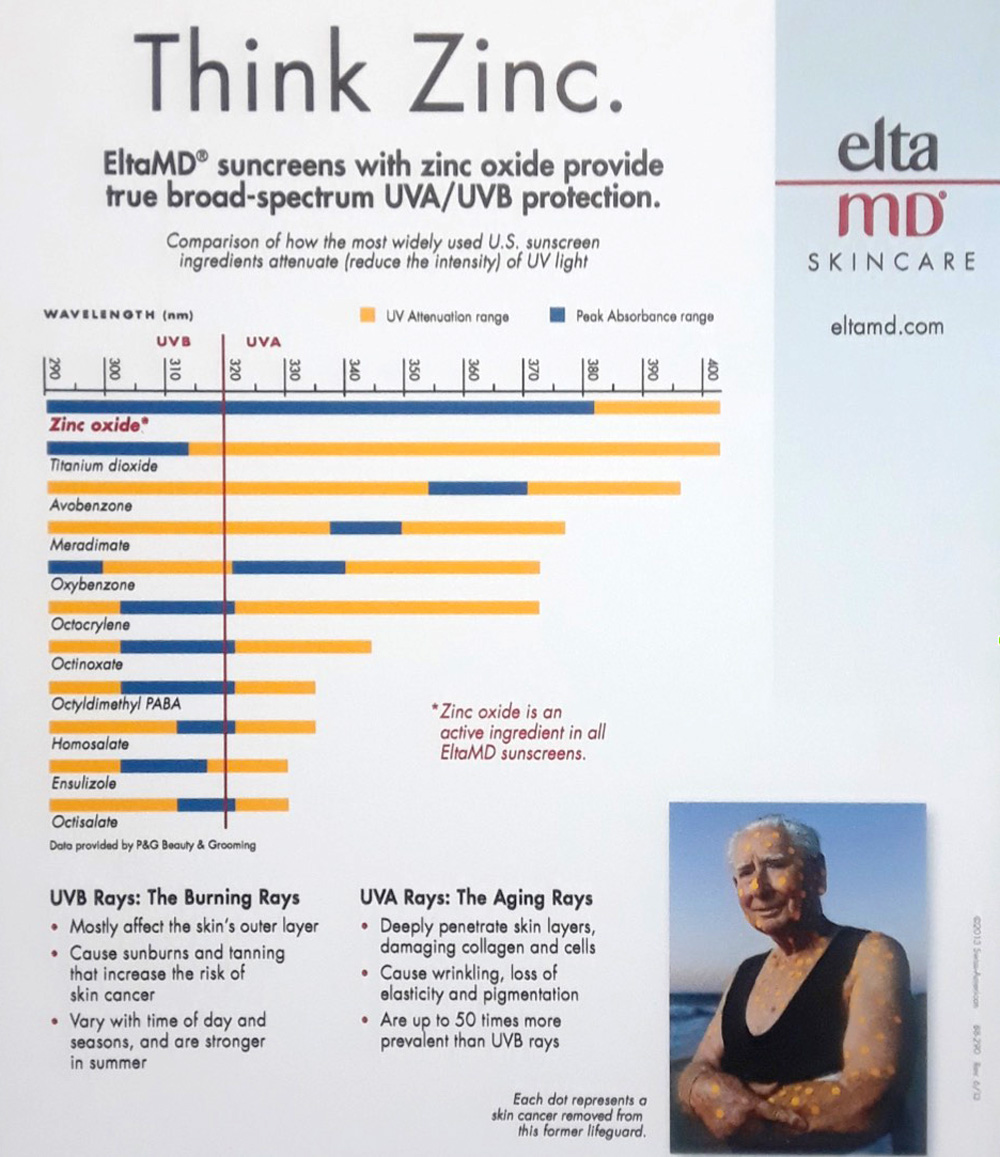
I’m thinking the easiest way to explain this is to use the table below.
Please remember that the SPF number – like 30 or 50 – only refers to the UVB component. The sunscreen industry fought the dermatologists’ (AAD.org) attempts to require 2 SPFs. There should be an SPF for both UVB and UVA, in my opinion. There is NO SPF that refers to UVA. The industry is allowed to say “broad spectrum” no matter how poor the UVA block in the product is. The industry definition of “minimum” requirements are lacking in the opinion of most dermatologists.
An SPF of 30 blocks 95-98% of the UVB rays. This is assuming that the correct amount is put on and then reapplied every 2-3 hours. We all know that many people don’t put enough sunscreen on and then forget to reapply it.
Why does zinc oxide matter?
When you look at the table below, a great sunscreen would have a blue bar all the way across the table. Yellow just means a partial (attenuation) block only. The only sunscreen ingredient that does that is ZINC!! Iron oxides are good too, but are only in powder sunscreens currently in the U.S. that I’ve been able to find.
The problem with what you said above, is the statement that a product meets the minimum requirement for blocking a high percentage of UVA. Zinc oxide is the only ingredient which does that. See below. If out in high risk sun situations, try to find zinc 15-20%.
Related Blogs
After sweating, how to reapply sunscreen?